
Portraits
Home Studio
Nathaniel Fish Moore pursued his interest in photography from his home "studio." While he was not a professional, he equipped his space in style: with enough light, varied backgrounds and furniture props to help the sitters remain comfortable for the duration of the exposure. For salt prints, the models would have to hold the pose for at least 10 minutes (and up to 30 minutes).
Holding a Pose
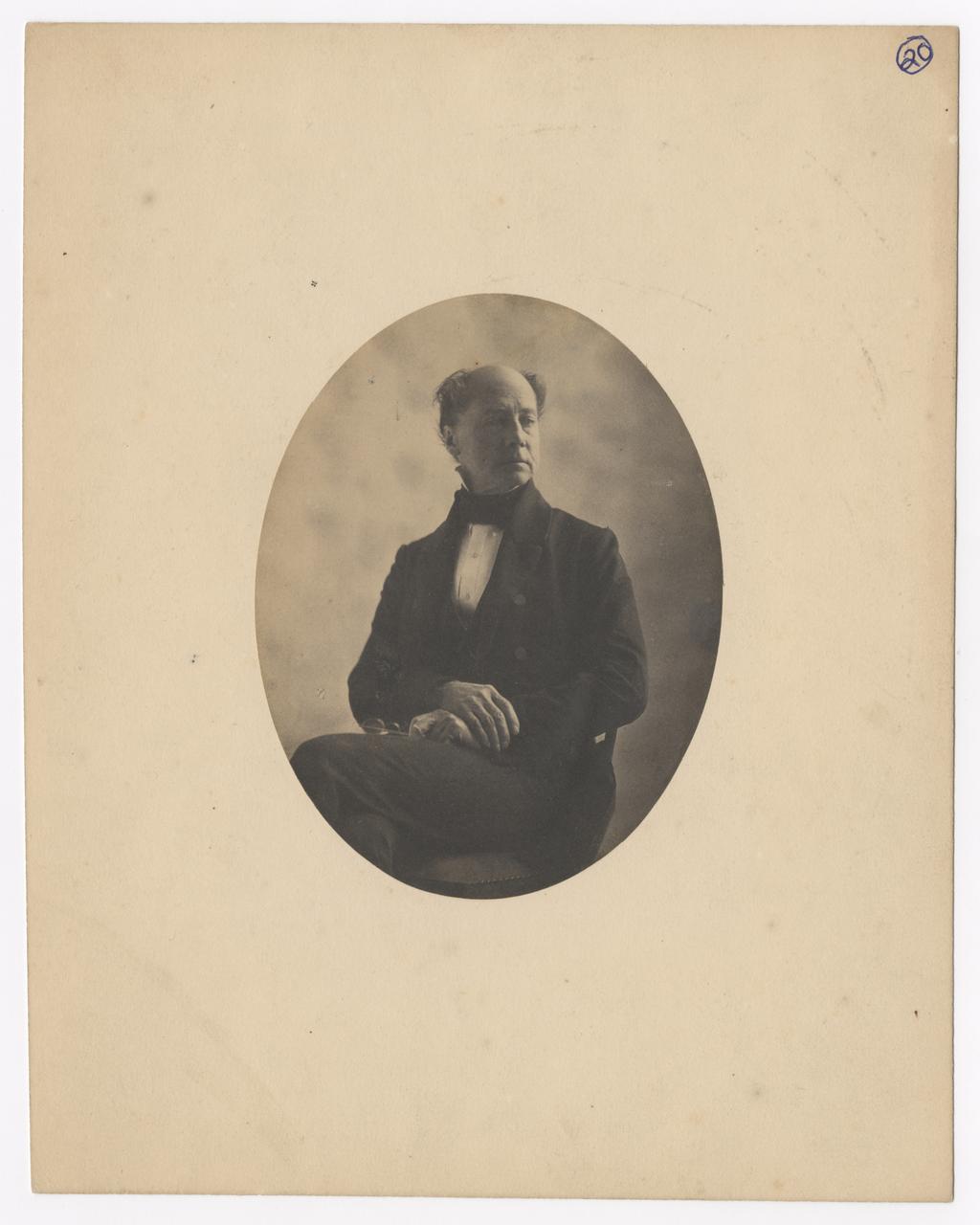
William Moore, Nathaniel Fish Moore's brother
William Moore
In this photograph, William Moore is holding his hands on his lap, which would help him remain still.
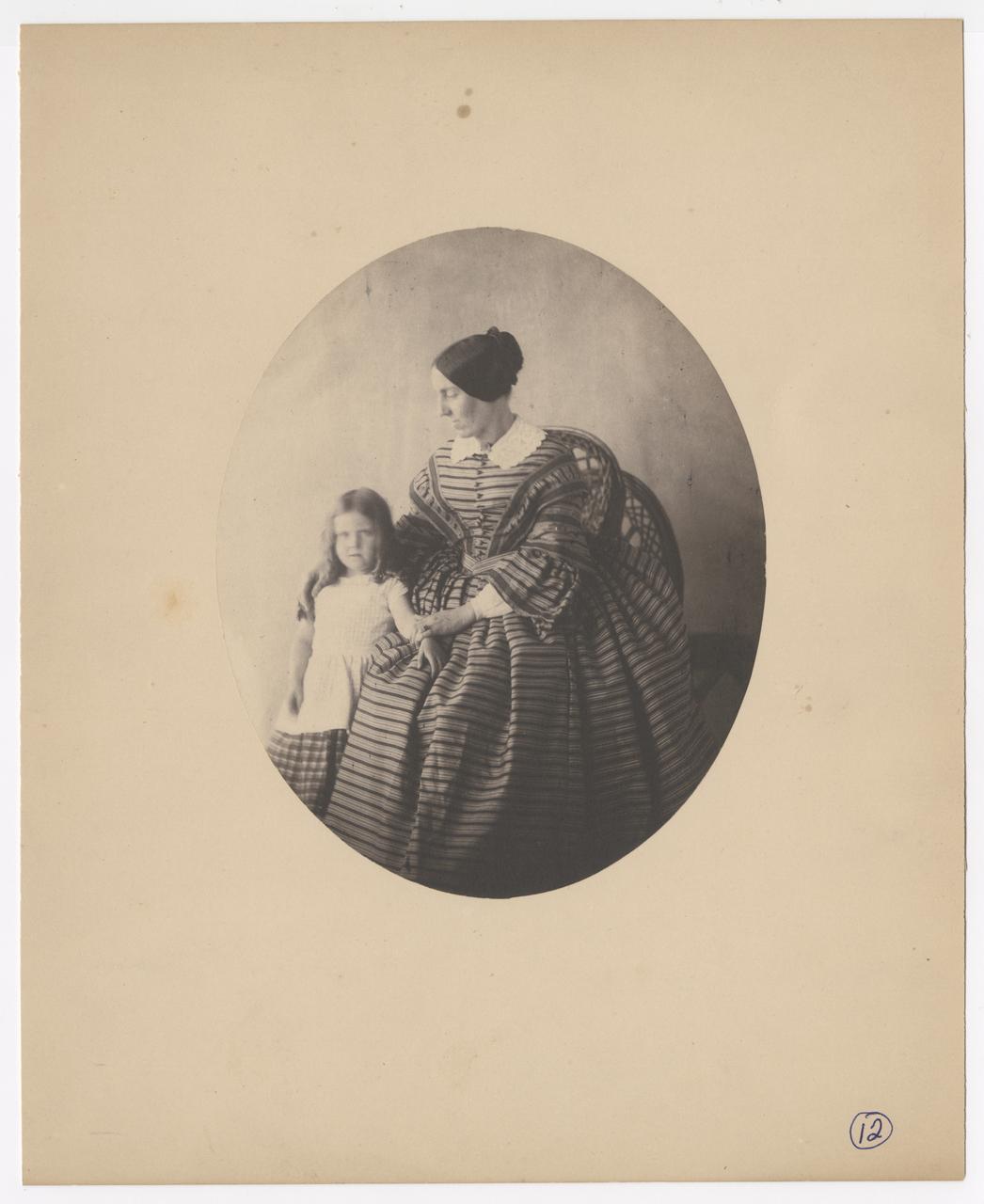
Unidentified women, seated with child by her side
In this portrait of an unidentified woman and child, the adult has held her pose during the exposure time. Her hair, face, and even the details of her dress are crisply captured. The child at her side must have changed her facial expressions during the session and her face is more a blur. Posing for photographs was not easy.
Studio Props: A Seat and a Side Table
For the next three photos, Moore has provided the same seat and side table to his subjects.
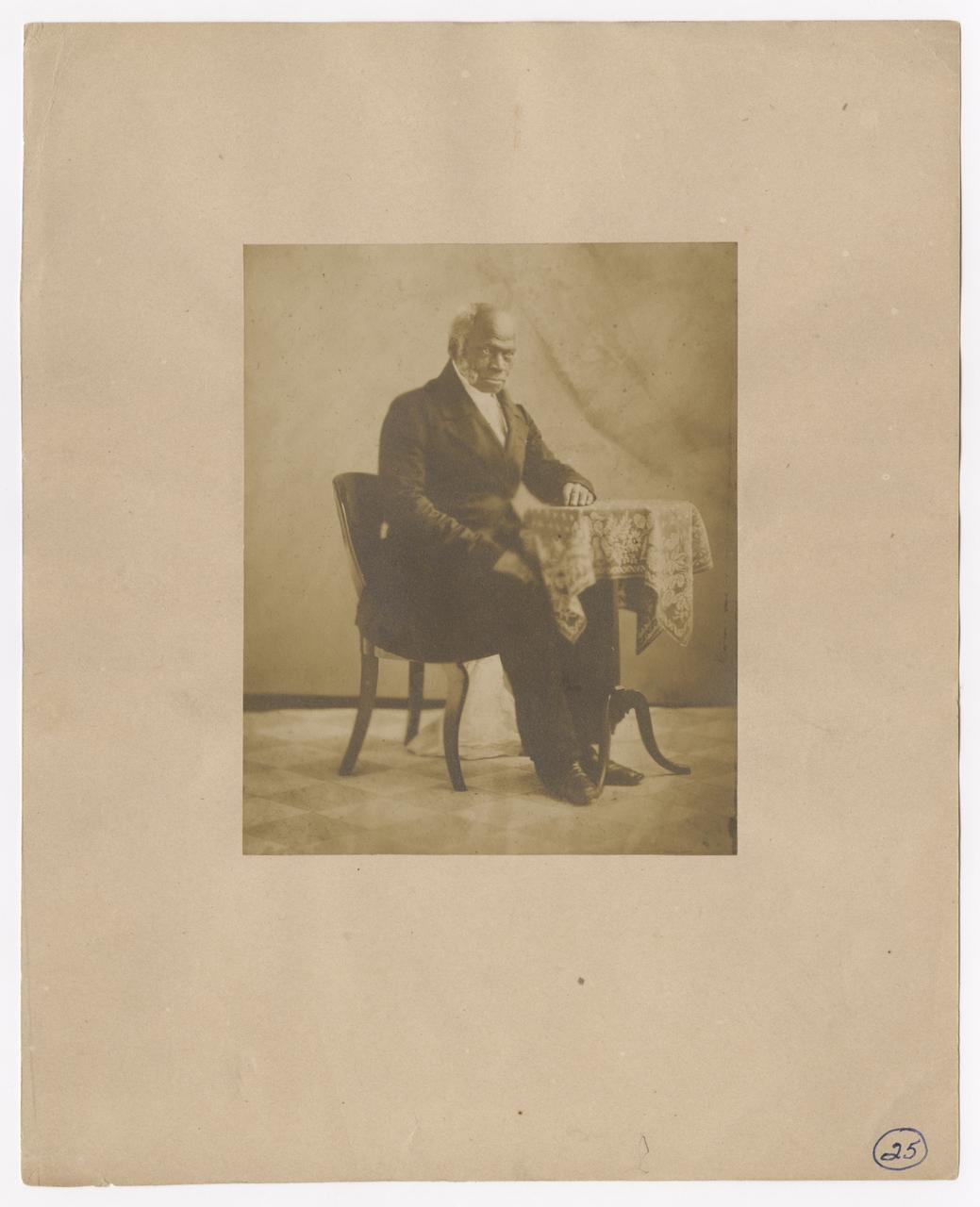
Pierre Toussaint, seated with his left arm resting on a side table
Pierre Toussaint (1766-1853)
Few of the salt prints donated by Hodges in 1944 came with descriptions, and in the case of this portrait, the information given is incorrect. On the back of the print, a handwritten caption by an unknown writer states: “The Moore Family’s faithful old servant – a slave.” Pierre Touissant was not a servant to the Moore family, and while he was an enslaved person for part of his life, by the time he posed for the photograph, he had been a free man for over 40 years.
Toussaint came to New York from Haiti (then Saint-Domingue) in 1787 with his enslavers, the Bérards. In the City, he was trained as a hairdresser by a Mr. Merchant and became a popular stylist for the ladies of the time. After the death of Jean-Jacques Bérard and the loss of the sugar plantation in Haiti, it was Toussaint’s income on which the widow Marie Bérard depended for the rest of her life (almost 20 years). When Marie died in 1807, Pierre became a free man and he chose the last name Toussaint in honor of the Haitian Revolution hero Toussaint Louverture. Toussaint was Sarah Ann Moore’s hairdresser. This is how Tousssaint, a Moore family friend by then in his 80s, came to pose for her brother Nathaniel’s portrait.
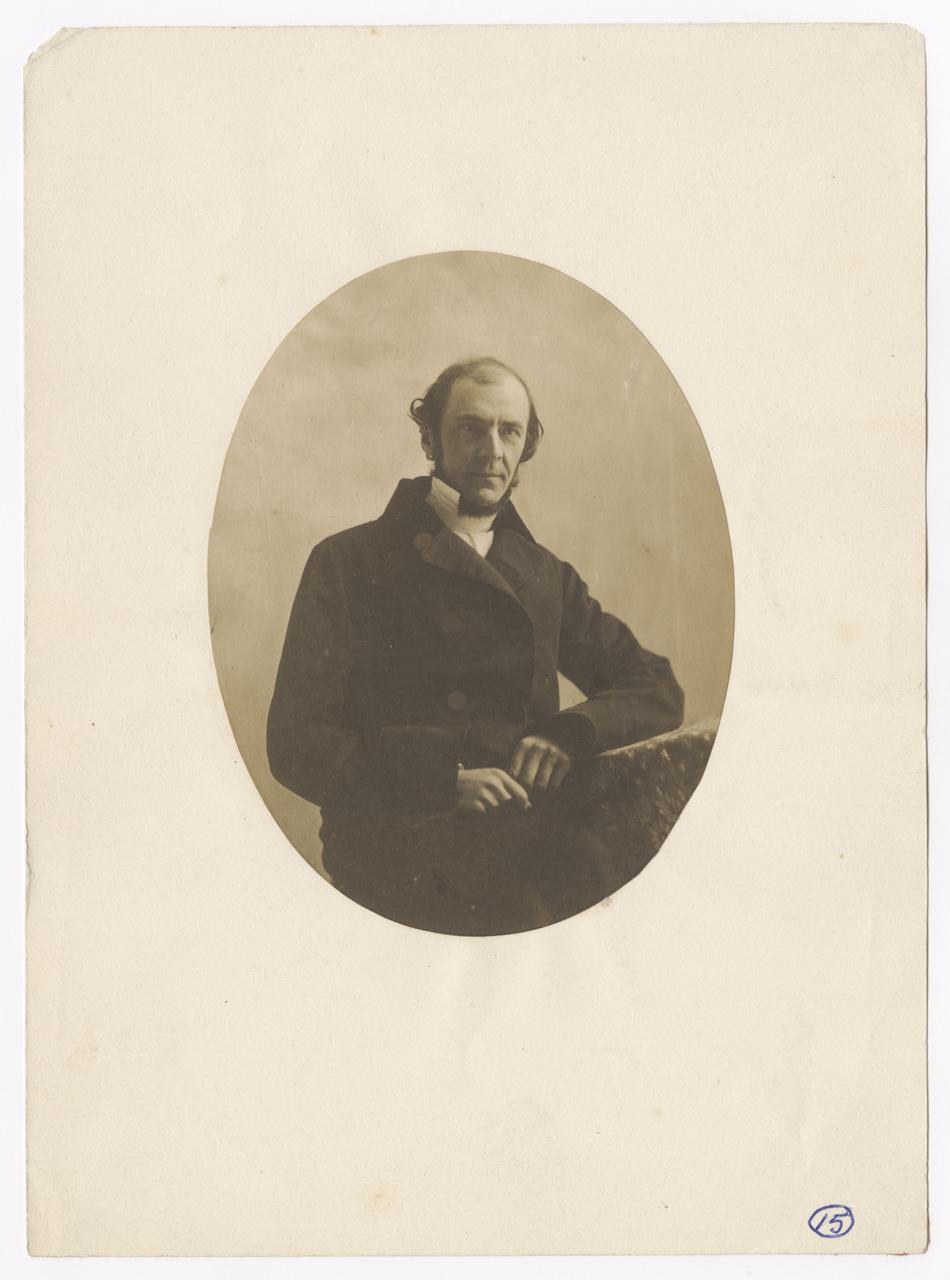
Unidentified man, seated with his left elbow resting on a side table
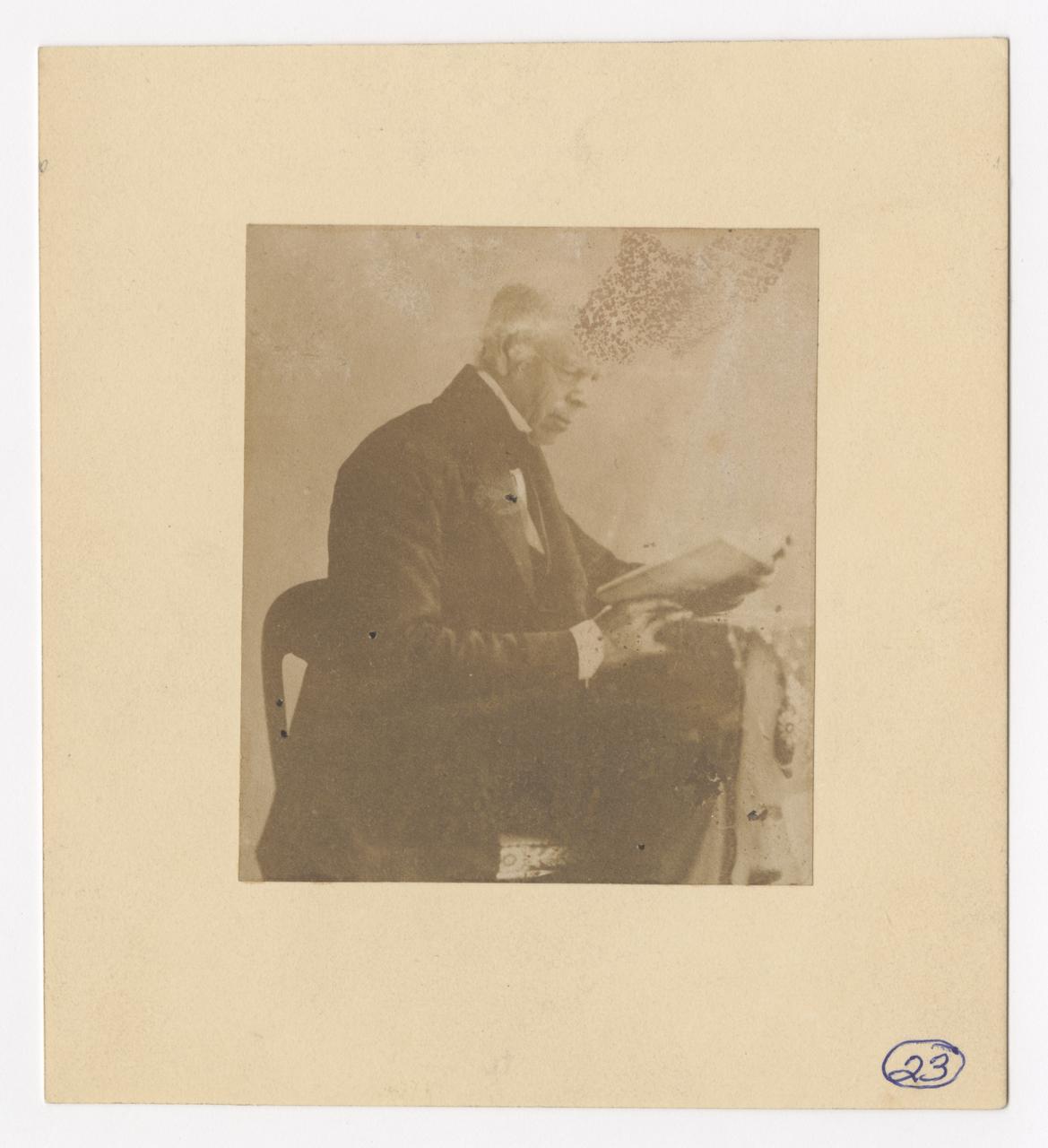
Nathaniel Fish Moore, seated and reading a book, with his left elbow resting on a side table
Studio Effects: Dark background
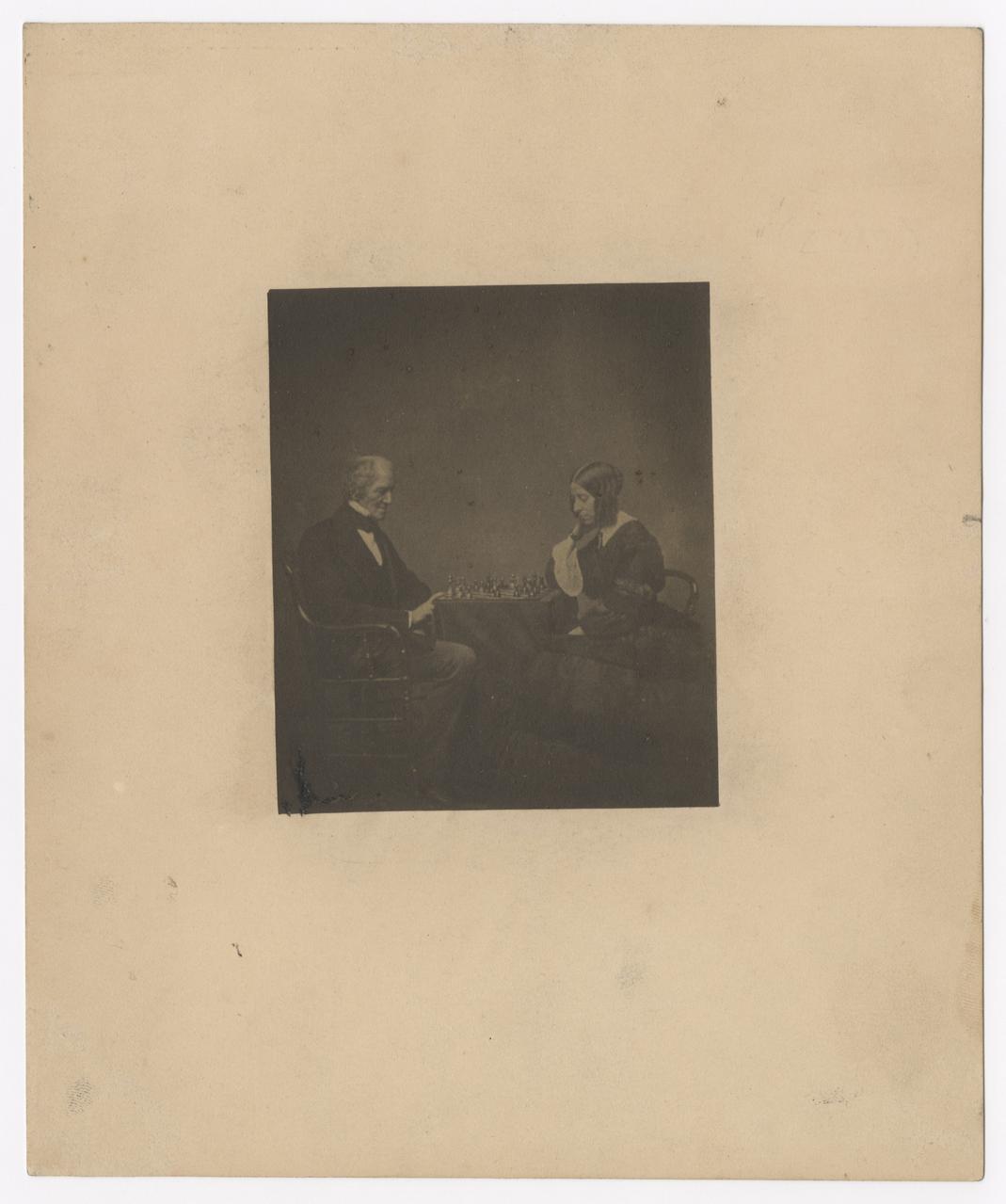
Clement Clarke Moore and his daughter playing chess, with a dark background
Clement Clarke Moore (1779-1863)
In this photograph, Nathaniel Fish Moore captures his cousin Clement Clarke Moore and one of his daughters playing chess. Clarke Moore was the son of Rev. Dr. Benjamin Moore, a graduate of King’s College (KC 1768) who served as president of both King’s College and Columbia College. Clement graduated from Columbia in 1789 and, at commencement, he delivered the valedictory speech “Gratitude.” He served as a Trustee of the College (1813-1857) and, as Clerk of the Board (1815-1850), he wrote the complete minutes of the board in his very clear and legible handwriting. In 1825, at an anniversary celebration of the College’s first commencement, Clement delivered an address before alumni which now serves as the first history of the College from its foundation in 1754. But he is perhaps best known as the author of 'Twas the Night Before Christmas.
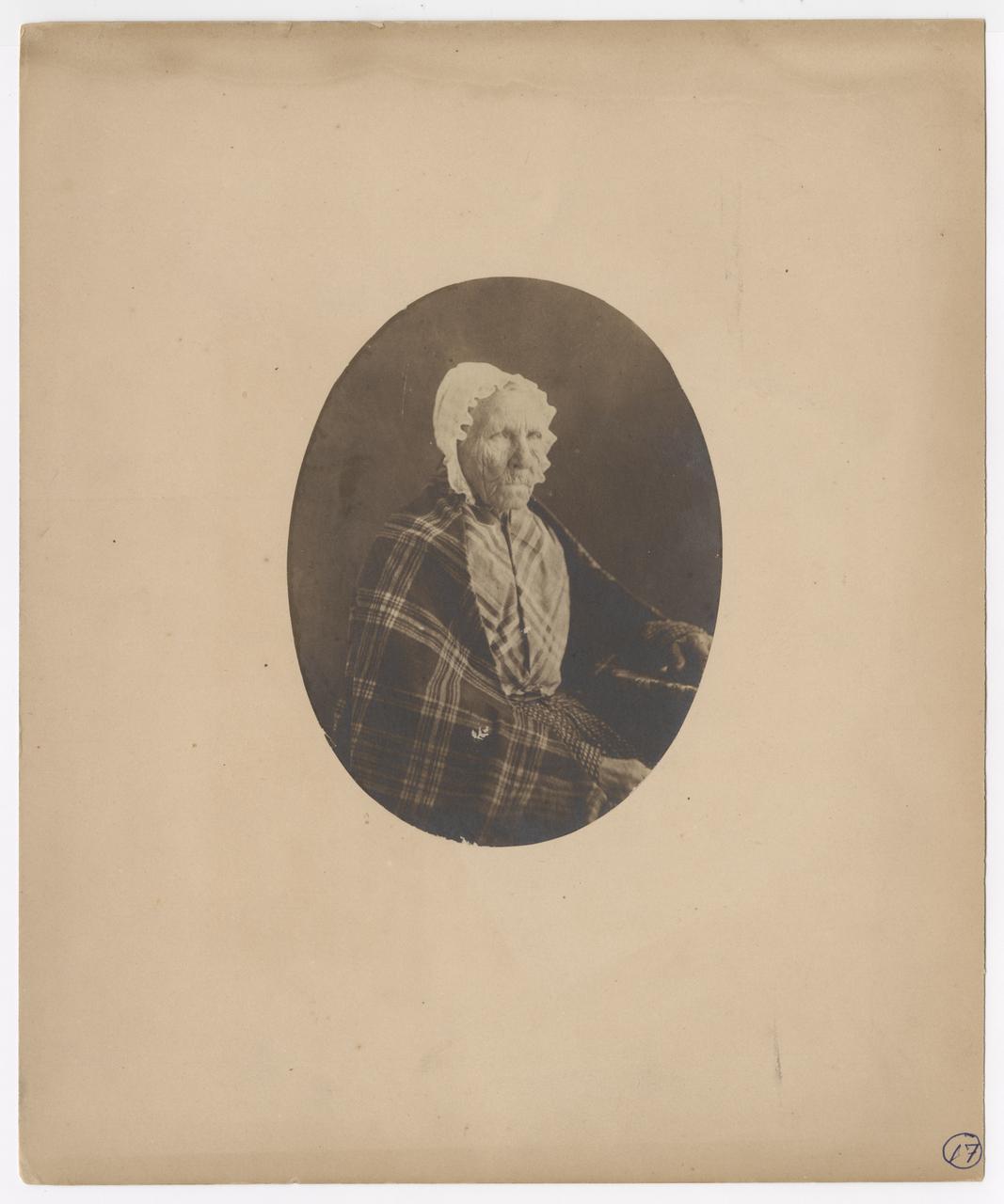
Seated elderly woman, with a dark background
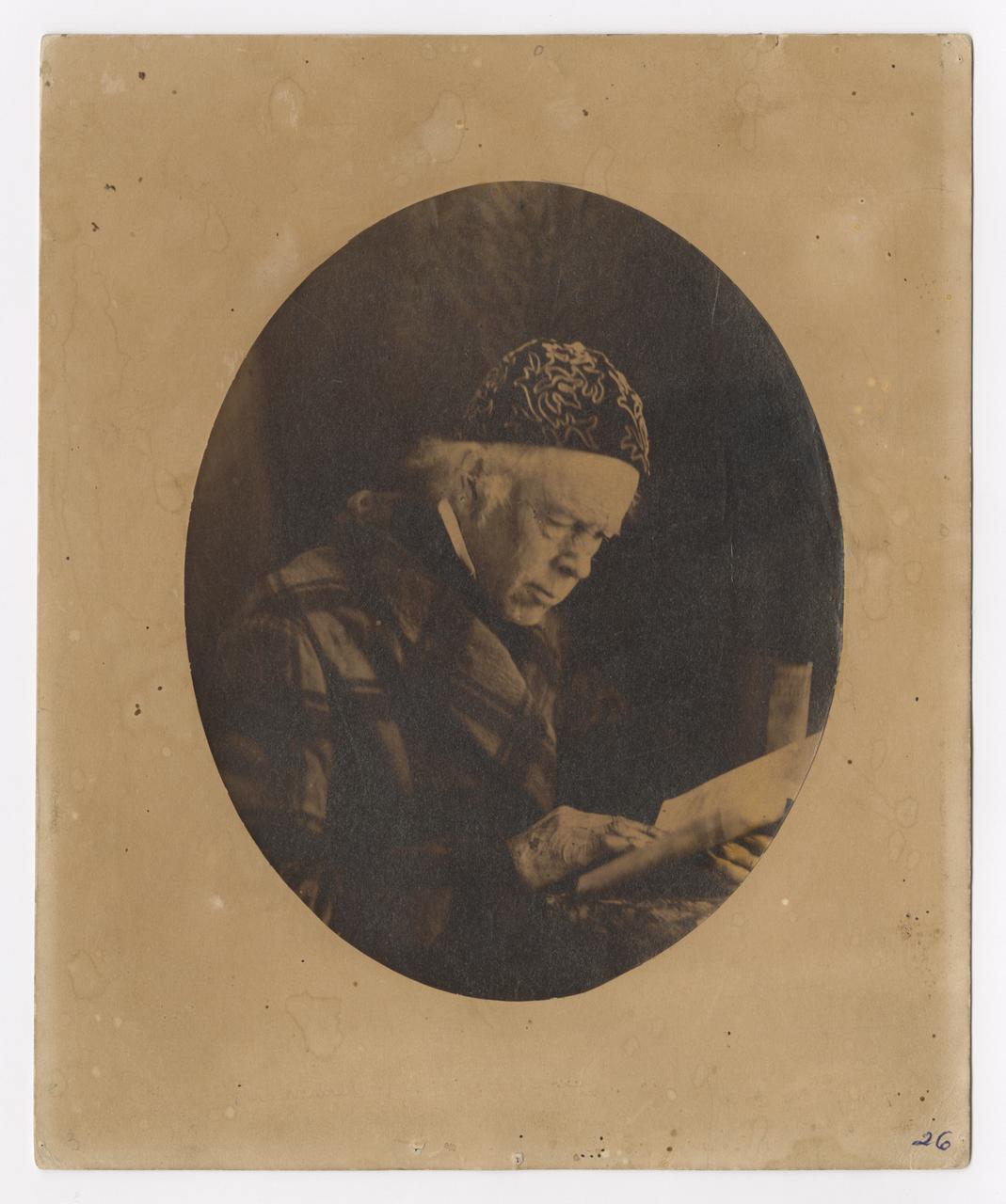
Nathaniel Fish Moore self-portrait, with a dark background