
Professor Salo W. Baron
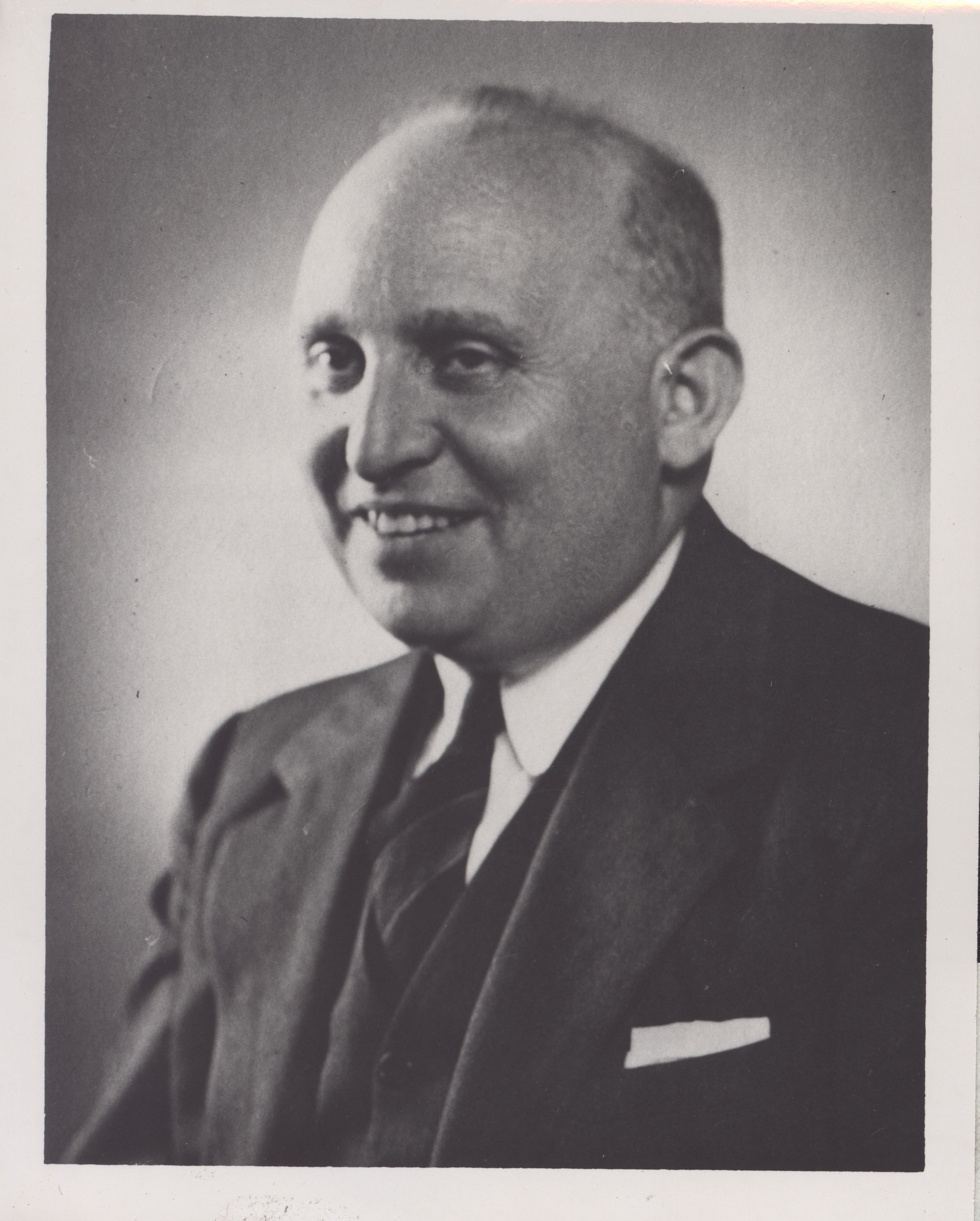
Salo W. Baron
- Collection
- Historical Photographs Collection, University Archives
Salo Wittmayer Baron (1895–1989) was one of the most influential Jewish historians of the 20th century and played a key role in the establishment of Jewish Studies at Columbia. Born in Galicia and educated in Vienna, Baron received rabbinic ordination in 1920 and earned three doctorates from the University of Vienna—in philosophy (1917), political science (1922), and law (1923). Between 1919 and 1926, he taught Jewish history at the Jewish Teachers College in Vienna, where he began to establish his reputation as a scholar.
In 1929, Columbia offered Baron a chair in Jewish Studies—the first position of its kind at a secular university in the United States. Though initially hesitant to accept, he ultimately agreed, and his appointment marked a turning point in the academic study of Judaism. The chair was officially named the “Miller Professor of Jewish History, Literature, and Institutions.” A brochure from the year after its founding describes the mission of the chair as promoting the study of Judaism “as a living religion and culture and the Jewish people as a social group in its political, economic, and intellectual history from the Old Testament period to our own days.” Courses offered included “Ancient Jewish history and literature,” “Social and political history of the Jews during the nineteenth century,” and “Jewish religious institutions.” The position was primarily affiliated with the Department of History but was also associated with the Department of Philosophy and the Department of Semitic Languages.
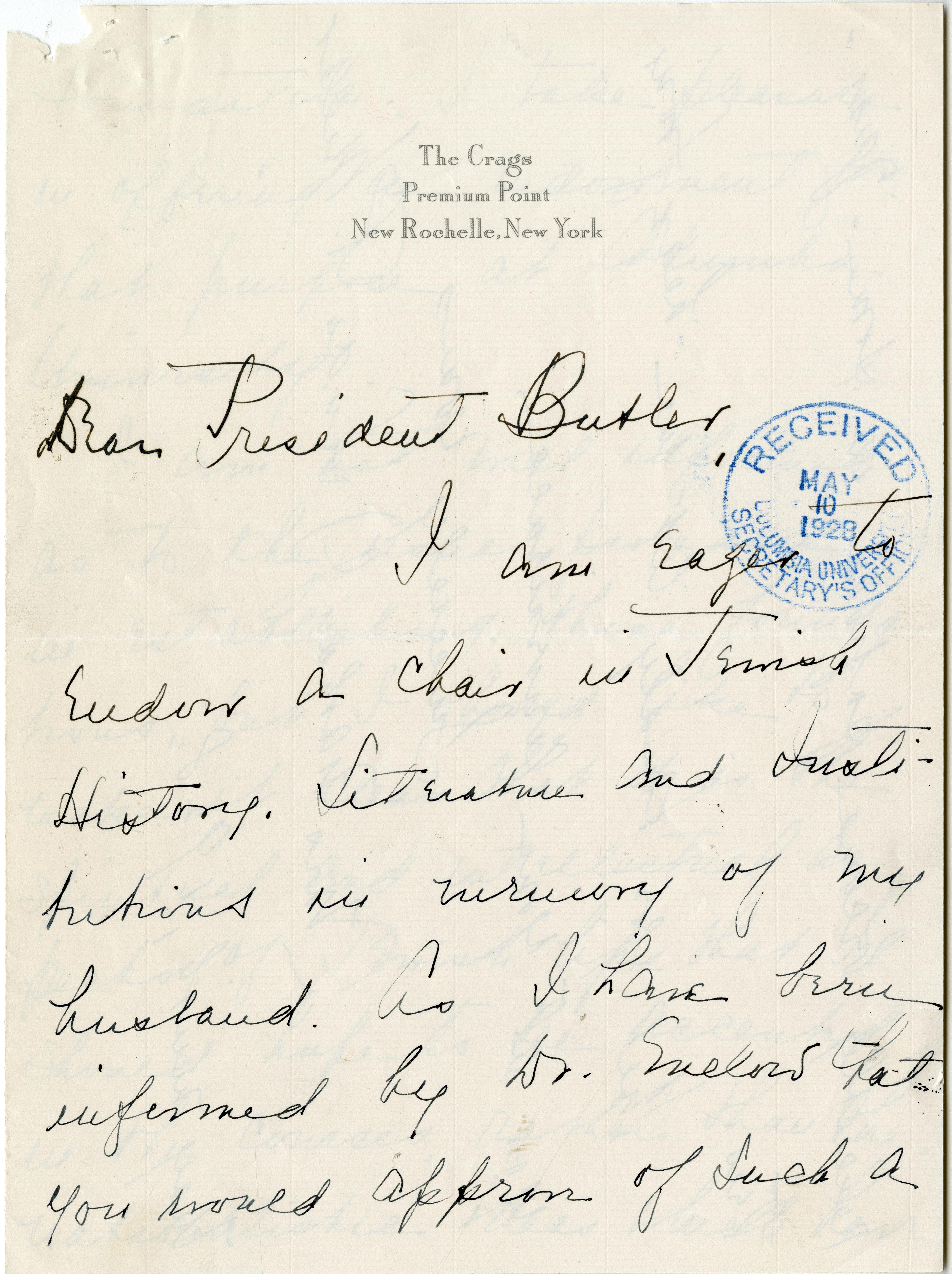
Linda Miller to Nicholas Murray Butler, May, 1928
- Collection
- Central Files, Box 667, Folder 31, University Archives
Baron’s vision for Jewish history was unique. He opposed what he termed the “lachrymose conception of Jewish history,” a view which emphasized Jewish suffering above all else. Instead, Baron emphasized the history of Jews’ creativity and development of culture and literature. For him, the Jewish past was not merely about survival but about vitality under difficult conditions.
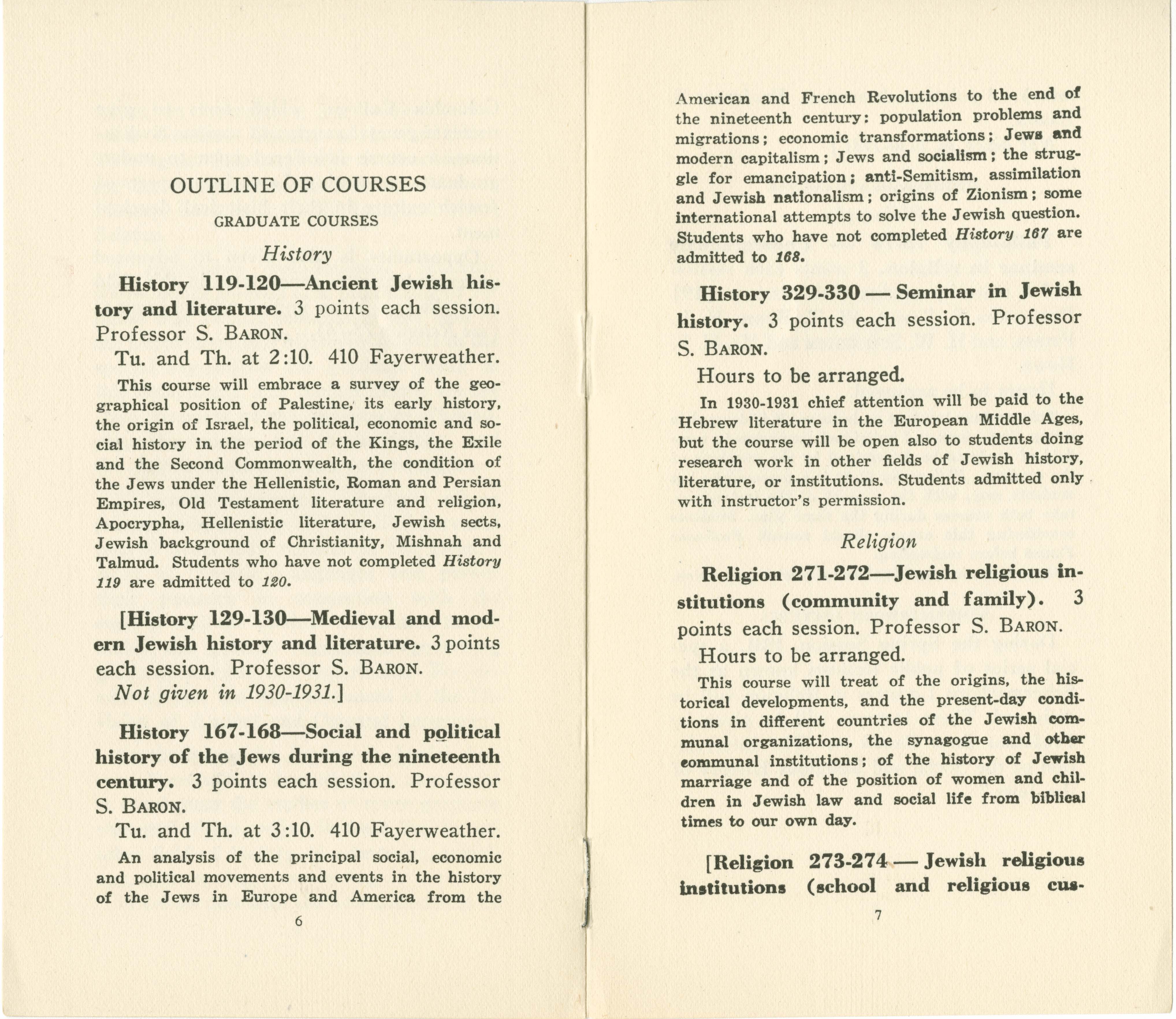
Jewish Studies Course Listings, 1930-1931
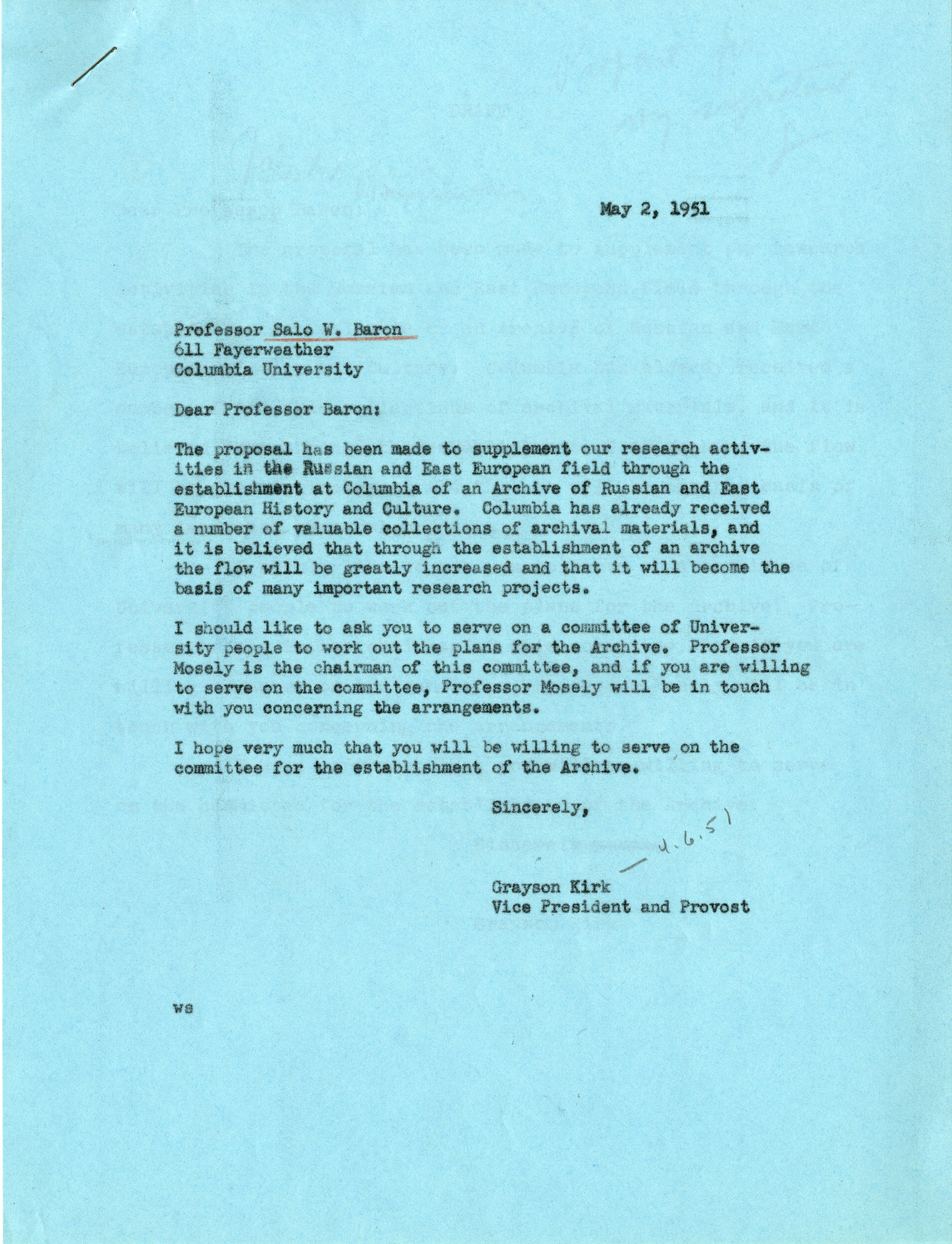
Grayson Kirk to Salo Baron, May 2, 1951, on “an archive of Russian and East European History and Culture.”
- Collection
- Central Files, Box 407, Folder 20, University Archives
Perhaps Baron’s most famous scholarly achievement was his epic multi-volume work titled A Social and Religious History of the Jews, still a cornerstone in the study of Jewish history. While rumors spread that Baron was hiding a team of assistants this was far from the truth: his wife served as Baron’s only regular collaborator. Baron was tireless in his dedication to research and writing.
Beyond his scholarship, Baron was instrumental in founding and directing Columbia’s Center for Israel and Jewish Studies in 1950 (now the Institute for Israel and Jewish Studies). Even after retiring in 1963 as Professor Emeritus of Jewish Studies, Baron remained a towering presence in the field. He was recognized across the world for his scholarship, most notably when he served as a historical expert witness during the 1961 trial of Adolf Eichmann in Jerusalem.